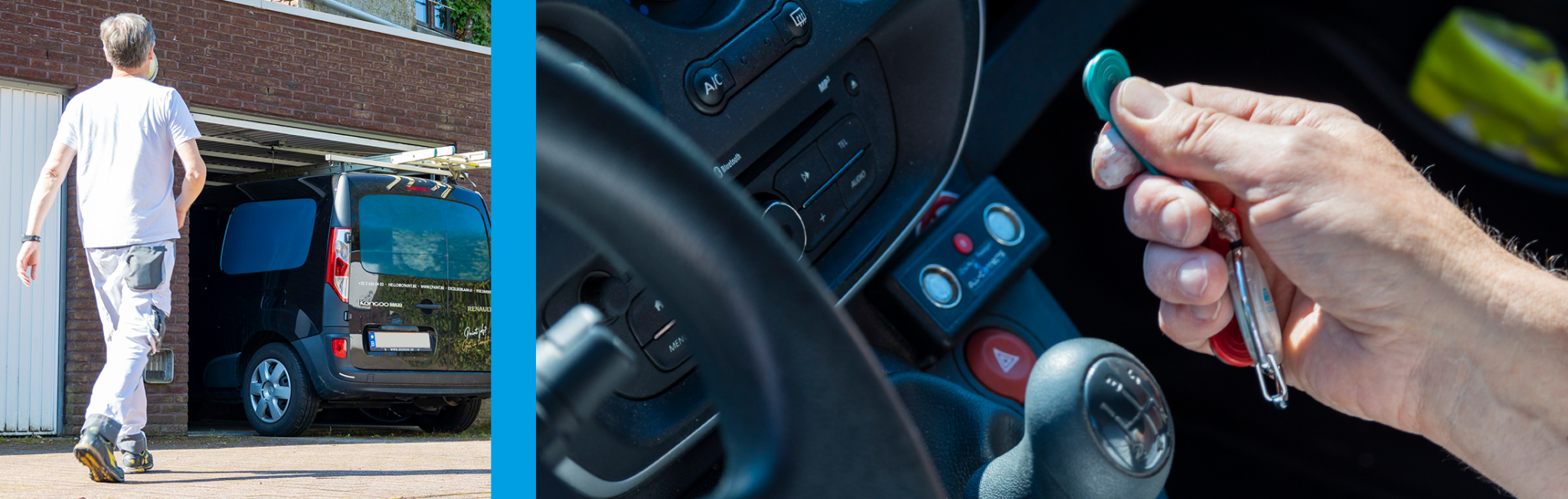
Fleet tracking devices often connect to a vehicle's On-Board Diagnostic (OBD) port. When connected to this port, a fleet tracking device can collect and communicate advanced diagnostic data in addition to location and speed.
Common features of fleet tracking systems include:
- Location determination
- Track rides
- Travel Book
- Mileage/mileage counter
- Speed
- Directions
- Fuel level
- Battery Voltage
- Diagnostic fault code (DTC) message.
Fleet tracking systems connected via the OBD port provide a wealth of detailed vehicle performance information, in addition to basic data such as location and speed. This enables not only real-time tracking of vehicle movements, but also proactive maintenance planning and cost control.
Additional benefits of Fleet Tracking with OBD Data:
- Preventive maintenance: By receiving diagnostic trouble codes (DTC) in real time, problems can be detected early and resolved before they lead to costly repairs or downtime. Read about our maintenance scheduling solution here.
- Optimize fuel consumption: Fuel levels and driving behavior, such as idling and hard acceleration, can be monitored to reduce waste and drive more economically. Read about our fuel monitor solution here.
- Driving behavior analysis: In addition to speed and direction, driving behaviors such as hard braking and rapid acceleration can be tracked, helping to promote safe driving and reduce the risk of accidents. Read about our driving behavior analysis solution here.
- Compliance support: Fleet Tracking can help with compliance with driving hours and work logs, essential for industries where this is mandatory.
- Cost savings: Through more efficient management of vehicles and drivers, fuel consumption, wear and tear and repair costs can be reduced, resulting in significant cost savings.
So these types of systems offer much more than location data, and can help companies improve fleet efficiency, reduce operational costs and increase driver safety.